Most people think they know Dracula. They don't. What they know is Bela Lugosi's cape, Gary Oldman's romantic agony, or a hundred Halloween costumes. Bram Stoker's 1897 novel is a stranger, darker, and far more interesting creature than any of its adaptations suggest — though it's not without its flaws.
The Epistolary Canvas: Stoker's Boldest Move
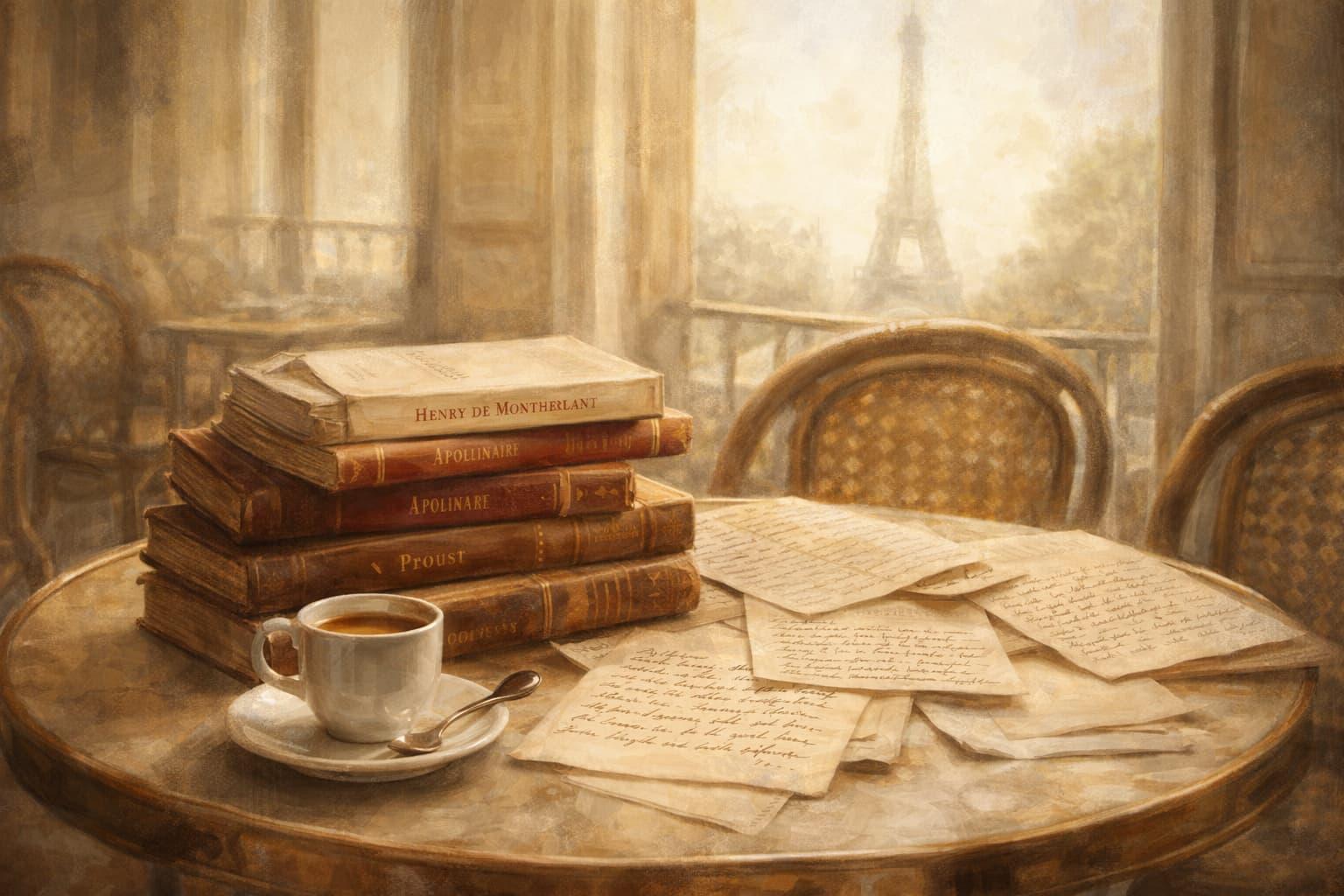
Stoker made an audacious structural choice: no omniscient narrator, no single point of view. Instead, the entire novel unfolds through journal entries, letters, telegrams, ship logs, and phonograph recordings — a mosaic of voices that forces you to piece the horror together yourself.
And it works beautifully. Jonathan Harker's early journal entries from Castle Dracula are claustrophobic and visceral, the prose of a man whose rational mind is crumbling in real time. Dr. Seward's clinical phonograph diaries offer a cooler lens, a scientist trying to force the impossible into medical categories. The newspaper clippings ground the supernatural in a mundane, recognizable world, making Dracula's invasion of London feel like something reported on the evening news.
The genius connector is Mina Harker. She transcribes, cross-references, and synthesizes every scrap of evidence. She is, in effect, the novel's editor — and without her intellectual labor, the heroes would never understand what they're fighting. This collective storytelling builds tension brilliantly, revealing information from multiple angles and making the reader an active participant rather than a passive observer.
The novel doesn't tell you a story. It hands you the evidence and dares you to believe it.
Themes That Still Cut Deep
Beneath the Gothic surface, Dracula is a novel about anxiety — Victorian England's anxiety, specifically, about everything it couldn't control.
Sex, Desire, and What Couldn't Be Said
The eroticism in Dracula is unmistakable and deliberately transgressive. In an era where a woman's ankles were considered risqué, Stoker gave us the Brides of Dracula: openly sensual, predatory, and terrifyingly free. Lucy Westenra's transformation from innocent maiden to vampiric seductress preying on children is a direct assault on every Victorian ideal of feminine purity. And Mina's forced blood communion with the Count carries an intimacy that the characters themselves recognize as a kind of violation. Stoker understood that the most effective horror is the kind that makes you uncomfortable about your own fascination.
The Foreign Invader
Dracula — ancient, Eastern European, aristocratic, barbaric — lands in England and begins to corrupt it from within. This is reverse colonialism as nightmare fuel. At the height of the British Empire, Stoker imagined the colonized "other" arriving on English soil to claim dominion, a fear that tapped into deep anxieties about imperial decline and cultural contamination. It's a theme that, for better or worse, has only grown more resonant with time.
Science vs. the Unknowable
Dr. Seward tries to diagnose vampirism with blood transfusions and medical textbooks. He fails. It takes Van Helsing — a man who embraces both modern science and ancient folklore — to truly understand the threat. Stoker wasn't anti-science, but he was deeply skeptical of a worldview that refused to acknowledge what it couldn't measure. In an age of increasing empiricism, the novel argued that some forms of knowledge were older and more necessary than the laboratory could provide.
The Characters: Brilliant Anchors, Interchangeable Filler
Here's where honesty matters. Stoker created three genuinely unforgettable characters — and surrounded them with well-meaning but largely indistinguishable men.
Count Dracula is a masterclass in restraint. Forget the suave, romantic vampire of cinema — Stoker's Count has hairy palms, a cruel mouth, and breath that makes Harker recoil. He's terrifying precisely because Stoker keeps him in the shadows. His presence is felt through consequences: dead sailors, drained women, a madman raving in an asylum. When he does appear, it's with the cold intelligence of a predator who has had centuries to perfect his methods.
Mina Harker is the novel's true hero, and it's not close. While the men charge around with garlic and stakes, Mina does the intellectual heavy lifting: organizing the documents, identifying patterns, and ultimately providing the psychic link that tracks Dracula to his lair. She's the embodiment of the "New Woman" that so fascinated and terrified Victorian society — educated, capable, and far more competent than most of the men around her.
Van Helsing is eccentric, brilliant, and occasionally maddening. His long-winded speeches can test your patience, but his role as the bridge between reason and superstition gives the novel its philosophical backbone.
The rest — Arthur, Quincey Morris, Seward, even Harker after the opening act — blur together. They are brave, devoted, and functionally interchangeable for long stretches. Stoker needed a band of heroes; he just didn't give them enough individual texture to truly distinguish one from another. It's the novel's most significant structural weakness, and it causes the middle third to drag.
Stoker created one of literature's greatest villains and one of its most underrated heroines. The men in between are the price of admission.
Where the Novel Falters
No honest review of Dracula can ignore its pacing problems. The opening in Transylvania is electric — arguably some of the finest horror writing in the English language. The closing pursuit back to Dracula's castle is tense and satisfying. But the middle section, where the heroes slowly piece together what the reader has known for a hundred pages, can feel like watching someone solve a puzzle you've already completed.
Van Helsing's tendency to lecture — at length, in broken English, often repeating himself — slows scenes that should be urgent. And the novel's treatment of its female characters, while more progressive than critics sometimes acknowledge (Mina is extraordinary), still reflects the patriarchal assumptions of its era. The men repeatedly exclude Mina from their plans "for her protection," even after she's proven herself the most capable mind in the room. Stoker seems to recognize the absurdity of this, but never fully commits to the critique.
These aren't fatal flaws. But they're real, and acknowledging them makes the novel's genuine achievements shine brighter by contrast.
Legacy: The Vampire Starts Here
Stoker didn't invent the vampire. Folklore about blood-drinking creatures is ancient and global. But he codified the modern archetype so completely that virtually every vampire story since — from Nosferatu to Twilight — is either building on or reacting against his template. The aristocratic predator, the aversion to garlic and crucifixes, the stake through the heart: these conventions weren't universal before 1897. After Dracula, they became the vocabulary of an entire genre.
What most adaptations lose, though, is the novel's texture. The epistolary structure, the slow accumulation of dread, Mina's central role, the genuine ugliness of Stoker's Count — these elements rarely survive translation to screen. If your Dracula is handsome and brooding, you haven't met Stoker's version.
Final Verdict
Dracula is not a perfect novel. It's too long in the middle, too generous with Van Helsing's monologues, and too timid in following through on its most progressive instincts. But its best passages remain among the most atmospheric and psychologically disturbing in horror literature. Its thematic depth rewards rereading. And its three central creations — the Count, Mina, and the epistolary structure itself — are genuine contributions to the art form.
If you've only ever met Dracula through his adaptations, you owe it to yourself to read the source. It's darker, stranger, and far more rewarding than the cape-and-fangs caricature suggests. Just be prepared for the middle chapters to test your patience before the extraordinary finale.
Frequently Asked Questions
Is Dracula a difficult read?
The Victorian prose is denser than modern fiction, but the shifting voices and document types keep things dynamic. If you can handle Dickens, you can handle Stoker — and the suspense carries you through the heavier passages.
How accurate are the film adaptations?
Most take enormous liberties. Coppola's 1992 version added an entire love story that doesn't exist in the novel. Stoker's Dracula is not romantic — he's repulsive, calculating, and monstrous. The book offers a fundamentally different (and more frightening) experience than any screen version.
What are the main themes?
The battle between good and evil, Victorian sexual anxiety, the fear of the foreign "other" and reverse colonialism, the tension between science and superstition, and the role of women between agency and constraint. It's a richer novel thematically than most people expect.
Did Bram Stoker invent vampires?
No. Vampire folklore predates the novel by centuries. But Stoker codified the modern archetype so effectively that virtually every vampire story since is in dialogue with his version. He didn't create the myth — he gave it its definitive shape.
Why read the book if I've seen the movies?
Because you haven't actually met Stoker's Dracula. The novel's epistolary structure, its psychological depth, and its genuinely unsettling atmosphere are things no adaptation has fully captured. The book is scarier, smarter, and more complex than any film version.